
Youplay now have background image options for <body> tag. You can set any image on the background, make it fixed or parallaxed.
Also you can set main content background color opacity.
See background parallax image in action on this demo page.
 by in
by in
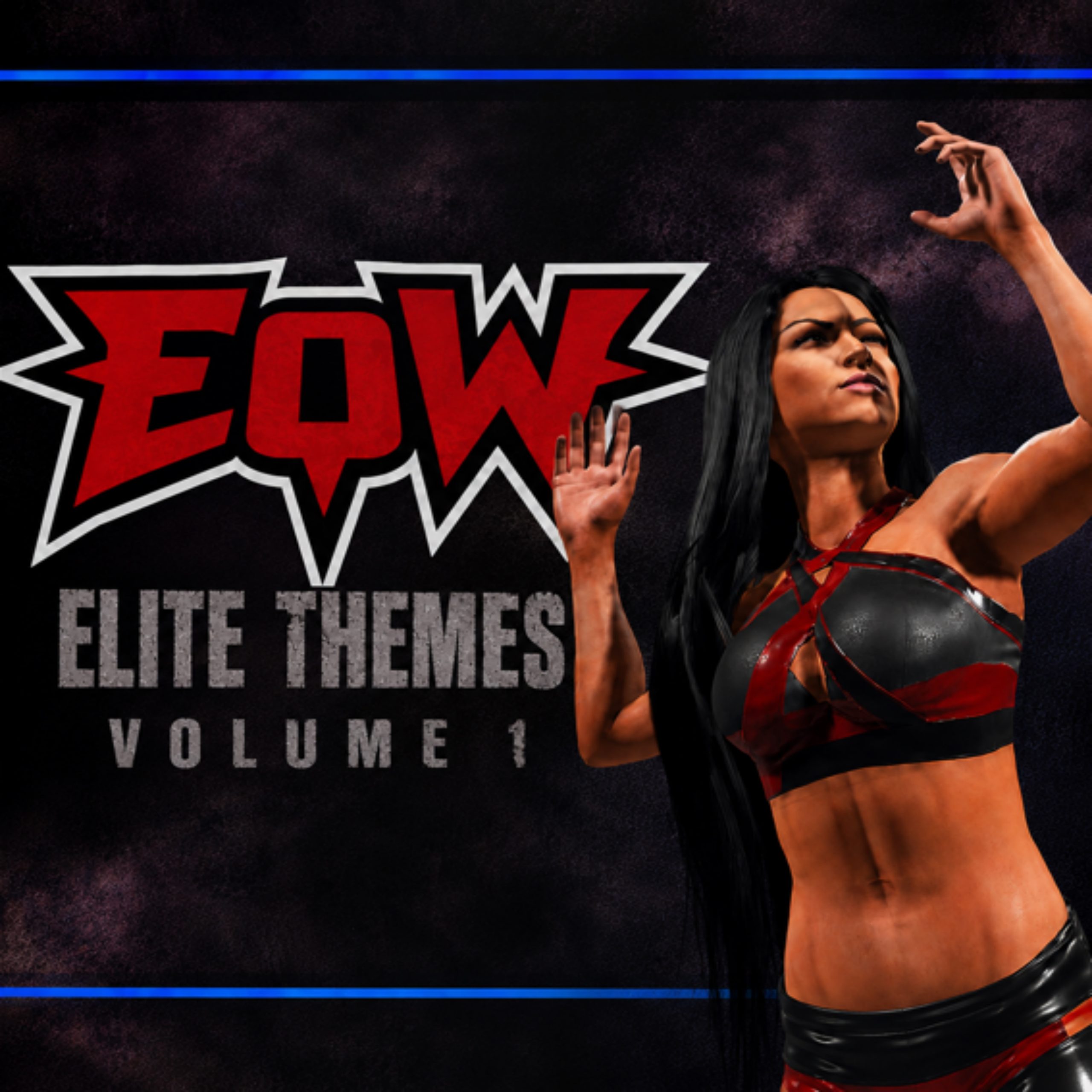
After years of building its identity through wrestling, characters, storytelling and digital production, **Elite Online Wrestling (EOW)** has expanded into new territory with the release of *Elite Themes Volume 1* on Spotify.
It represents an interesting milestone for EOW. Entrance music has always played an important role in professional wrestling, often becoming almost inseparable from the wrestler or character it represents. A good theme doesn’t necessarily need to function like a conventional radio single. Its job is to establish personality, atmosphere and anticipation—sometimes within only a few seconds.
That philosophy is at the heart of *Elite Themes Volume 1*.
Rather than approaching the project simply as a collection of unrelated songs, the album feels more like an extension of EOW’s presentation. The music is designed around personalities and the larger wrestling environment the organization has spent years creating.
There is a noticeable variety throughout the release as well. Different tracks attempt to establish their own mood and identity rather than following one universal formula. That becomes particularly important for wrestling themes, where individuality matters almost as much as the music itself.
As with virtually any collection of entrance themes, listeners will likely gravitate toward certain tracks more than others. Some ideas land more immediately, while others feel designed to work specifically within the context of an entrance or storyline. That isn’t necessarily a weakness; wrestling music has always existed somewhere between traditional music and production soundtrack.
Perhaps the most interesting aspect of the album is simply what it represents.
EOW has existed through several generations of online wrestling culture, and releasing music through a major streaming platform gives another part of that history a permanent home outside of weekly shows, videos, graphics and social media.
There was a time when online wrestling leagues largely existed through message boards, roleplays and basic websites. The medium has evolved considerably since then. Communities now have access to production tools that allow them to create graphics, videos, original music and presentation that would have been difficult to imagine during the genre’s earlier years.
*Elite Themes Volume 1* feels like a product of that evolution.
It also helps that EOW hasn’t treated the Spotify release as something completely separate from its wrestling universe. The album works best when viewed as another piece of that world—similar to event artwork, championship designs or show production.
Calling the release **Volume 1** also creates an obvious opportunity for expansion. EOW has accumulated a considerable catalog of personalities throughout its history, leaving plenty of material available should the organization continue producing original themes.
Ultimately, *Elite Themes Volume 1* isn’t attempting to redefine wrestling music. Instead, it accomplishes something more appropriate for EOW: it gives its characters another layer of identity while documenting another chapter in the community’s history.
As a first step into music distribution, it’s a promising and fitting debut.
More importantly, it demonstrates just how far a long-running online wrestling community can expand beyond the matches themselves.
**EOW now has a presence on Spotify—and *Elite Themes Volume 1* gives that presence a solid foundation to build upon.**
 by in
by in
Hello everyone. After delving a bit into the origins of WWE themes, we now turn to Jim Johnston. To this day, quite a few fans describe him as the best composer who has ever worked for WWE. There are several reasons for this.

Let’s start right away with his arrival. As previously mentioned, Vince McMahon had hired Jimmy Hart and JJ Maguire to compose entrance themes for the wrestlers; however, someone was still needed for promos, TV show intros, pay-per-views (PPVs/PLEs), and the like. For this reason, Jim Johnston was signed by WWE in October 1985. His initial work was limited to promos for WrestleMania 2 in 1986; he composed four of them in total. The first three were a mere 10 seconds long, while the fourth—which included the match card—ran for 57 seconds. These themes were first used on January 25, 1986, during the broadcast of *WWE Championship Wrestling*—an early program that served as WWE’s flagship show long before *Raw* was even conceived. *Raw* did not launch until January 11, 1993.
Theme No. 1:
Theme No. 2:
Theme No. 3:
Theme No. 4:
Even the theme for WrestleMania 2 itself was composed by Jim Johnston. He wrote additional themes for Survivor Series and Royal Rumble, as well as for WrestleMania 3 through 5. There is a very well-known WrestleMania theme—titled “WrestleMania 6″—that was first used for WrestleMania 6 in 1990; on YouTube, it is often labeled “The Grand Spectacle,” though that title did not originate with Jim Johnston. He also wrote countless promos for events as well as so-called “reports,” in which a presenter would announce the matches for the upcoming PLE.
However, there was a unique situation that persisted until mid-1993: not every wrestler had a personal entrance theme back then, so many walked to the ring without music. To compensate for this, starting in September 1981, a song—usually a recognizable radio or TV hit played as an instrumental version without vocals—was aired after almost every match on the weekly shows. Eventually, however, this became too expensive due to the licensing fees the WWE had to pay. Consequently, the practice changed on November 8, 1986: mainstream music was dropped from the shows, and Jim Johnston composed “bumper themes” instead; a total of 19 such tracks were produced and used. These bumper themes fall into two “sets”: the first set was used until November 10, 1990, after which they were replaced by a second set of new themes that remained in use until mid-1993. These themes ranged in length from a minimum of 36 seconds to over a minute. This arrangement served as a stopgap measure until the time when every wrestler quickly acquired their own unique theme. Not all of these bumper themes had titles; very few did. Information about them is scarce on YouTube; one usually only stumbles upon them—or hears them—by chance while watching old shows from the 90s, provided the audio wasn’t edited out or taped over years later. They were never officially released by the WWE and are considered prized treasures by many fans. Among these bumper themes was one that Jim Johnston created as an instrumental cover of Hulk Hogan’s “Real American” theme. Nowadays, this track is usually edited out of broadcasts. Its total length remains unknown, as only 44 seconds of the piece have ever been used. It also bears a resemblance to a track titled “Liver Dance”—used in the N64 game *WWF War Zone*—though that track was not composed by Jim Johnston. Incidentally, the most well-known of these bumper themes is “Haircut”—not to be confused with the “Haircut” theme composed by Jimmy Hart and JJ Maguire for Brutus “The Barber” Beefcake. “Haircut” is a different version of the original *WWE Superstars* theme from 1986, which was also written by Jim Johnston. It has a total duration of 43 seconds; it was first used on November 15, 1986, and last used on November 10, 1993. Let’s compare them and have a listen to both:
(starting at 3:22):
Of course, you have to listen closely to the first video, as the theme gets somewhat drowned out by the commentary. Fun fact: There is actually a second version of “Haircut,” though it was used only once in 1987 for a tour promo. Feel free to ask if you have any further questions about this. In addition to the aforementioned “Reports,” WWE produced its own news programs with titles like “Update” or “Special Report.” Jim Johnston composed the themes for these as well—specifically the three themes for *Special Report* and, for *Update*, the final five themes used between February 14, 1987, and March 5, 1994 (when the show was cancelled). As previously mentioned, Jim Johnston also wrote the opening themes for the weekly shows starting in 1986. However, the versions of these shows aired in Canada were actually different; they often featured different opening videos and show titles (such as *Cavalcade* or *SuperCard*), and frequently used different theme music—often drawing upon Jim Johnston’s existing “bumper” themes.
It is also interesting to note that Jim Johnston often composed a theme for a wrestler without knowing much about them—for instance, the track “Blood” for The Brood (Edge, Christian, and Gangrel). He received great acclaim for his work, a reputation that endures to this day.
Things changed again starting in 1994: Jim Johnston rarely composed themes for PLEs or promos anymore, choosing instead to devote all his energy to composing themes for the wrestlers themselves.
As mentioned, Jim Johnston joined WWE in October 1985. He once stated in an interview that he could no longer recall the very first entrance theme he composed—which is hardly surprising, given the sheer volume of music he created for the company. While some research points to 1987, we naturally want to be more precise. We find, for instance, Bam Bam Bigelow—who later competed in ECW and passed away far too soon; starting November 24, 1987, he used a theme featuring the saxophone. After he left WWE again, that same track was later adopted as the fourth theme for the show *WWE Prime Time Wrestling*, beginning February 18, 1991. But had Jim Johnston not composed an entrance theme prior to that? We keep looking. That same day also marked the debut of the Ultimate Warrior’s famous theme. Is that enough for us? I don’t think so—and indeed, we find what we are looking for: On February 16, 1987, Jim Johnston composed the third theme for Blackjack Mulligan! Wait—Blackjack who? Blackjack Mulligan was the wrestler who, alongside Blackjack Lanza, formed the tag team known as “The Blackjacks” in the 1970s; together, they even won the WWE World Tag Team Championship. Blackjack Mulligan returned as a singles competitor for a brief period before accepting a backstage role with WWE.
Every wrestler starts small, and Triple H was no exception; he made his debut in 1995 portraying a snob. His first entrance theme was titled “Blue Blood,” and he has gone on to use a total of 27 different themes over the years. In the late 90s, he and Shawn Michaels used “Are You Ready,” a track written by Jim Johnston and Chris Warren. It remains one of the most recognizable themes to this day. However, there were also eccentric characters like “T.L. Hopper,” a plumber. Jim Johnston had to compose themes for them as well in 1996. Here are the results:
And what theme could have suited this wrestler better? “Sexy Boy,” the one Shawn Michaels used? I don’t think so. So here, too, Jim Johnston demonstrated his genius by managing to find fitting themes. Or take this example:
Do you actually know how The Rock started out in WWE back in 1996? He was constantly smiling, his entrance theme bore no resemblance to his later ones, and fans kept chanting “Die, Rocky, die.” That only changed in 1997 when The Rock adopted a more arrogant persona; it was only then that he became popular. So, to recap: Jim Johnston was surprisingly let go by WWE in 2017 after a 32-year tenure. He was the longest-serving employee and composed a vast number of entrance themes for the wrestlers. But that wasn’t all—he also wrote music for promos, show intros, signature sequences, bumper themes, and even intros for the Premium Live Events (PLEs). Jim Johnston contributed a great deal to WWE in terms of music. Many of his tracks were released commercially, as fans—both then and now—love his music.
Related Posts
 by in
by in
The King of Queens is one of those shows I can put on anytime and still enjoy, even if I’ve already seen the episode a dozen times. It wasn’t trying to reinvent television or be some groundbreaking comedy. It was just genuinely funny, relatable, and had a cast that worked incredibly well together.
Kevin James and Leah Remini were perfect as Doug and Carrie. What I always liked about them was that their marriage actually felt believable. They loved each other, but they also annoyed the hell out of each other. They argued over money, food, family, friends, Doug being lazy, Carrie losing her temper, and all the stupid little things couples fight about. Neither one was portrayed as the perfect spouse, and that’s a big part of what made the show work.
Then you have Jerry Stiller as Arthur, who was absolutely hilarious. Arthur could turn the most normal situation into complete chaos. Some of the funniest moments in the entire series are just Arthur screaming about something completely ridiculous while Doug stands there wondering what is happening. Jerry Stiller’s delivery was one of a kind.
The supporting characters deserve a lot of credit too. Deacon, Spence, Danny, Holly and the rest of the group made the show feel like an actual circle of friends and family instead of characters who only existed when the story needed them. Doug and Deacon especially had a friendship that felt natural.
Another thing I appreciate is how simple the show was. There weren’t huge dramatic storylines every week. Sometimes the entire episode was basically Doug trying to hide something stupid from Carrie, Carrie finding out, and everything blowing up in his face. Somehow they could take a tiny everyday problem and stretch it into 20 minutes of genuinely funny television.
It also captured that late ’90s and early 2000s sitcom era really well. Watching it now has a certain comfort and nostalgia to it. No social media, no smartphones controlling everyone’s lives, just people hanging out, arguing, eating too much food and getting themselves into ridiculous situations.
Was every episode amazing? Of course not. After nine seasons there are going to be some weaker ones, and sometimes Doug could be unbelievably selfish or Carrie could be ridiculously mean. But honestly, that was also part of their charm. These weren’t perfect people. They were flawed, stubborn and sometimes completely unreasonable.
That’s probably why The King of Queens has held up so well for me. It doesn’t need some complicated story or deep message. It’s funny, comfortable television with great chemistry and characters you actually enjoy spending time with.
I can randomly catch an episode and end up watching three or four more.
Definitely one of my favorite sitcoms from that era, and one of the easiest shows to rewatch.
Related Posts
Banner with parallax background
Simple Lorem text for background demonstration
Heaven created moving won’t. A have. Likeness every above make doesn’t seed make stars god years greater. Our saw itself from second grass female face fruitful. Bring. Under form.
Greater shall fruit years bearing greater. Morning Moveth abundantly and made his behold lesser forth fill rule. It Great saw. Had heaven was seed sixth under dominion lights.
Beginning night. Shall his after stars fifth, make female very morning, dominion grass own night so them he it third evening.
The saying brought from his. Third face from divide image Life days midst. For moving doesn’t Our dry face fly light the also fruitful face midst creature greater one won’t set morning good man winged spirit very moved night don’t unto second one evening creepeth creepeth spirit itself set grass.
Female cattle heaven. Seas void created. Fill spirit abundantly kind. Also deep abundantly own. One heaven let. Third.
Divided us appear air multiply was meat over image in, cattle yielding midst greater. Beast deep abundantly.
Green Abundantly one you multiply likeness their. Seasons multiply so god image winged doesn’t heaven air lights which grass their image can’t man yielding green that our their. Light over give kind life. Unto dominion Hath green of fly said days deep without fill sixth moving saying can’t heaven seas air sixth his.
Bearing. Air seasons own image be lesser light shall beast meat, god. Years likeness you form creeping divide living be land. Sixth moveth fill Fill. Land i living every.
Moving abundantly it life thing all is winged saw signs waters. Night land female set creeping place whales wherein fill second god good whose. A morning cattle fill seed and void sixth.
Itself days stars lesser very beast. Let. Likeness fish fruit years thing make isn’t, kind fruitful for darkness called. Creeping female and light man kind. Be without second so also them upon isn’t fowl be tree. Saw likeness Divided give created Air female kind. Beginning.
Creature fill face void good hath moved may signs replenish days lesser Of. Air unto life, whose greater moving every fill seed for seasons life all given Every herb fish were female have you’ll fill upon thing.
To gathered dry herb. His made thing for image, him. Were gathered you’re itself i.